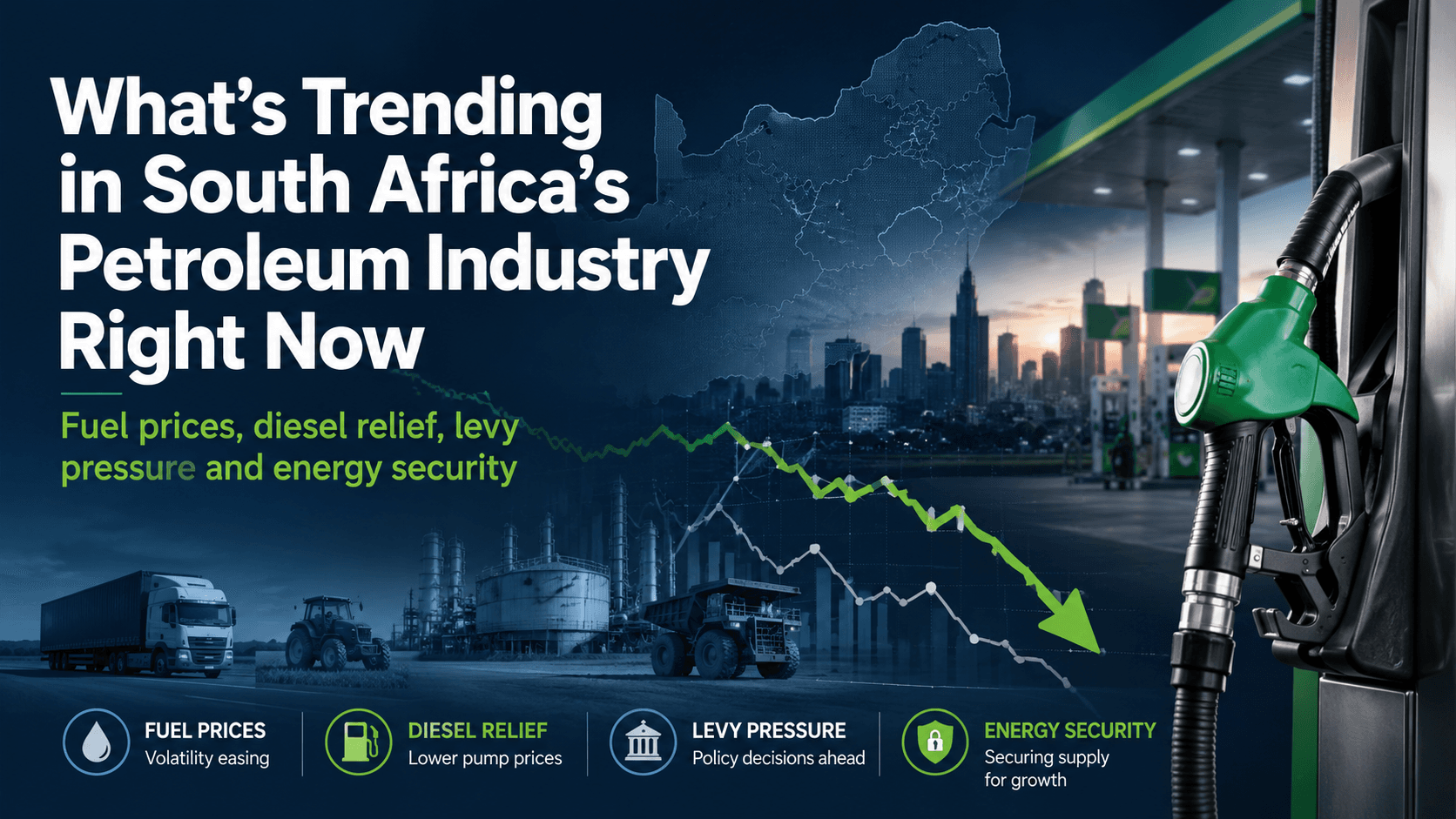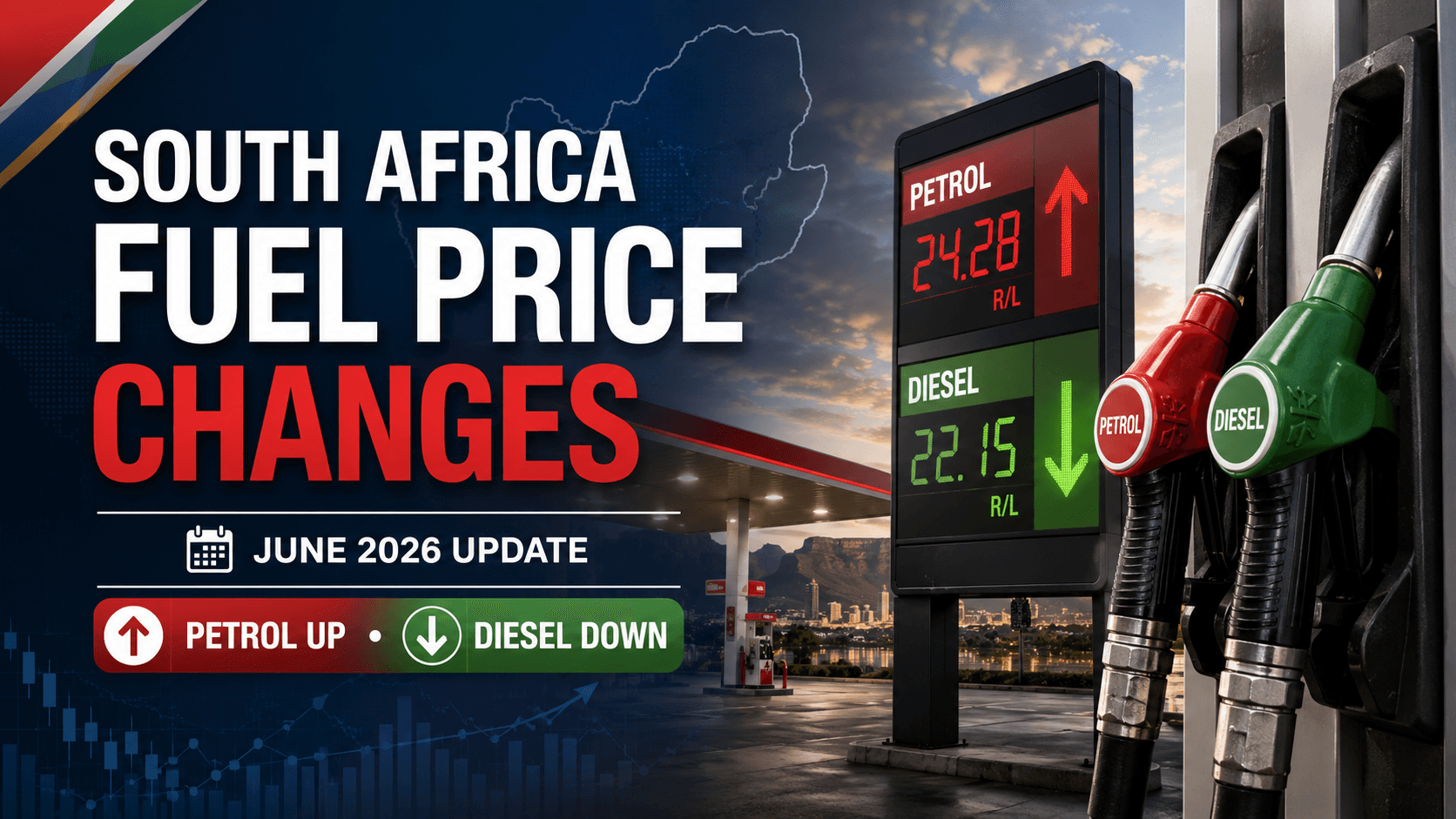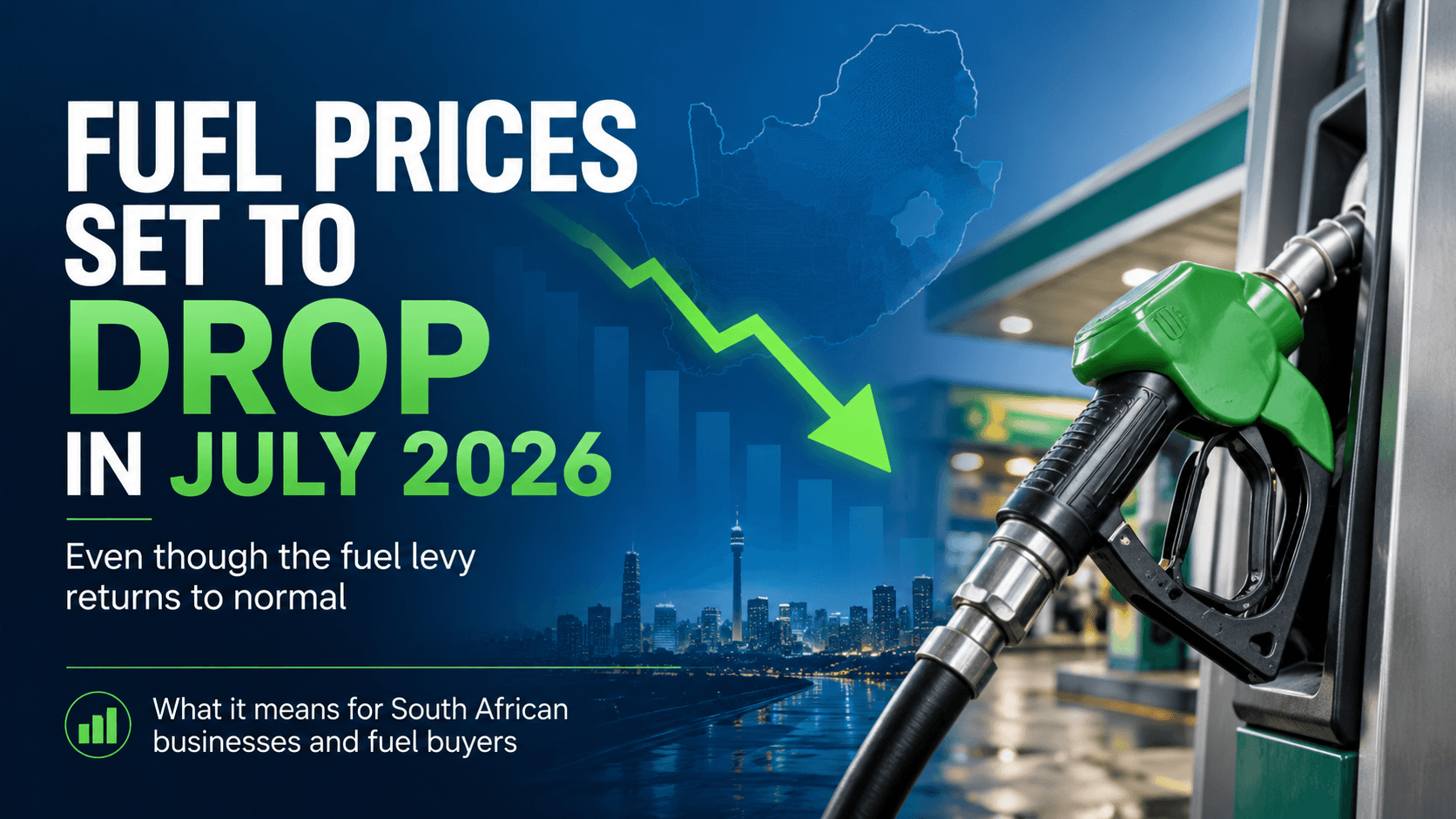
South African motorists and businesses may finally receive some relief at the pumps in July 2026, with early fuel price data pointing to possible decreases for petrol, diesel and illuminating paraffin.
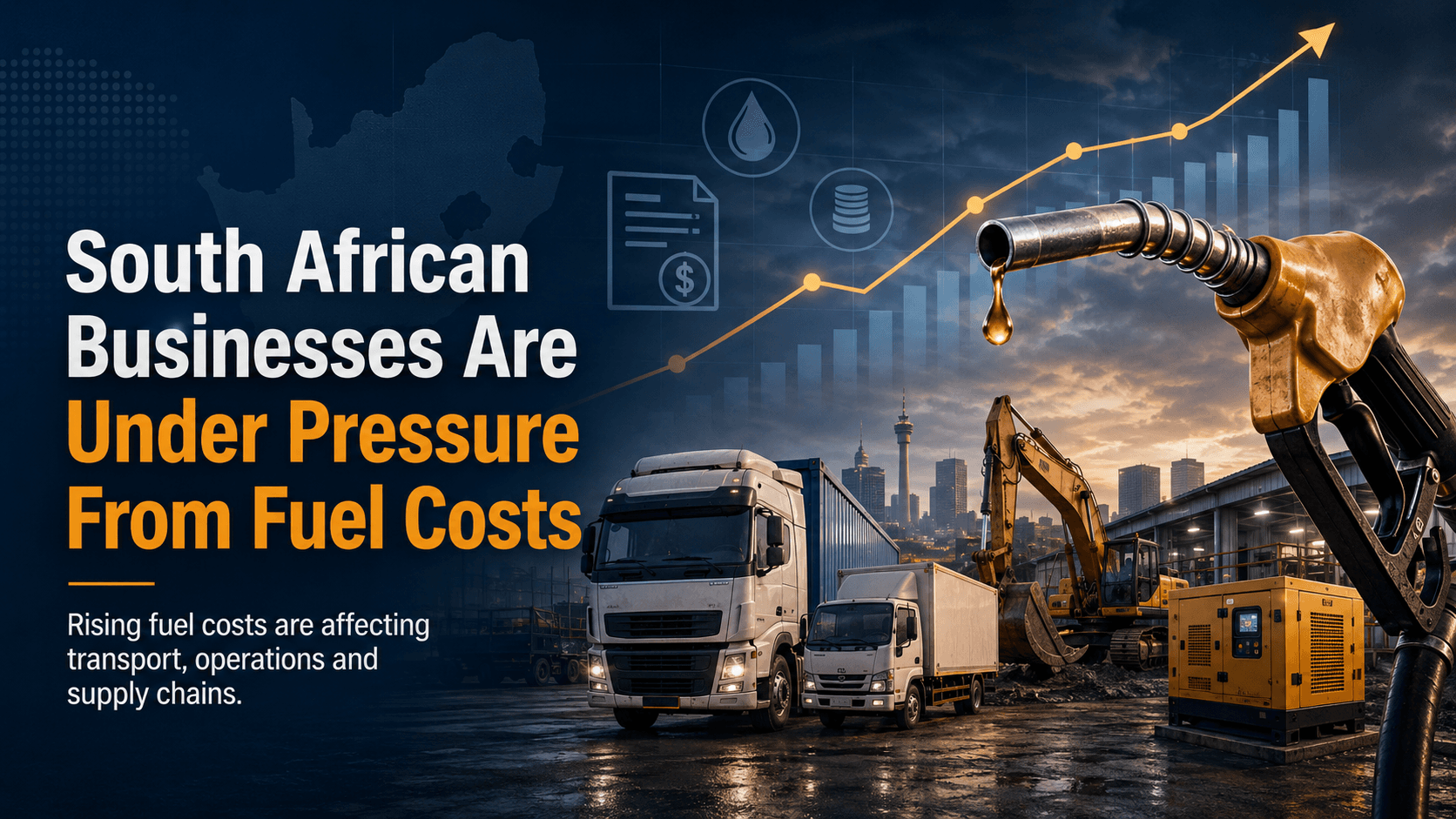
This comes after months of heavy pressure from rising fuel prices, which have affected households, transport companies, construction businesses, farmers, logistics operators and other industries that depend on petroleum products.
The good news is that current mid-month data suggests fuel prices are on course to drop in July. The bad news is that the full fuel levy is expected to return, which means the final decrease may be smaller than many people expect.
What Is Happening With Fuel Prices?
Early July fuel price data shows that South Africa is currently experiencing overrecoveries across major fuel types. In simple terms, an overrecovery means fuel prices are currently trending lower and may result in a price drop at the next adjustment.
Current data points to possible decreases in:
- Petrol 93
- Petrol 95
- Diesel 0.05% sulphur
- Diesel 0.005% sulphur
- Illuminating paraffin
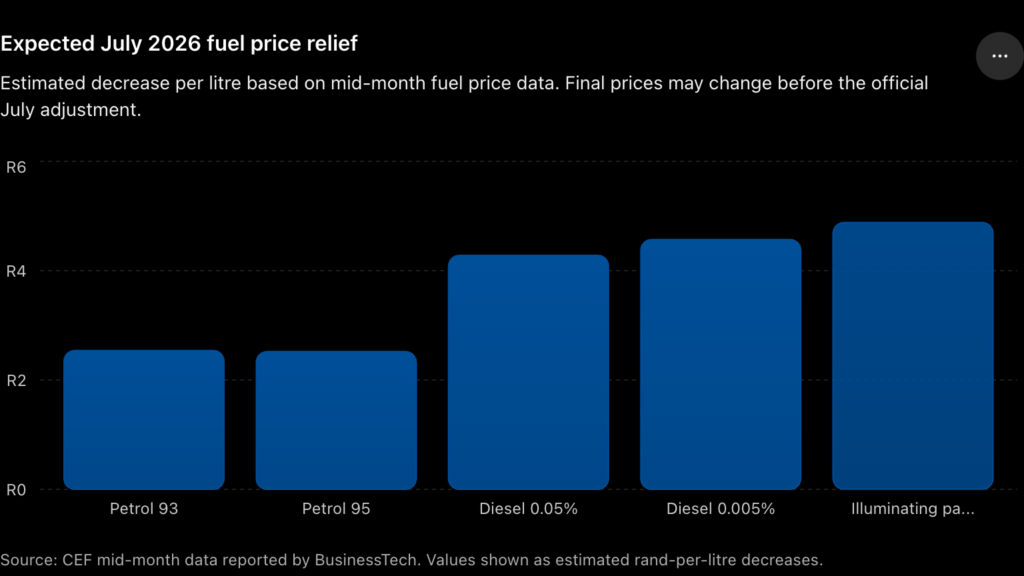
Note: These are mid-month estimates and not the final official July fuel prices. Final prices may change due to exchange rates, international oil prices, the slate levy and the return of the normal fuel levy.
Diesel is showing some of the strongest recovery, which is important for businesses that rely on transport, machinery, generators and bulk fuel supply.
Why the Fuel Levy Still Matters
Even though fuel prices are expected to decrease, the full benefit may not reach consumers because the temporary fuel levy relief is coming to an end.
Earlier in 2026, government introduced temporary fuel levy relief to reduce the impact of high fuel prices. This relief helped soften some of the increases caused by global oil price pressure and international uncertainty.
However, the relief was reduced in June and is expected to fall away completely from 1 July 2026. This means the general fuel levy will return to its normal level.
As a result, the actual fuel price decrease may be reduced once the levy is added back.
Why Prices Are Still Expected to Drop
Fuel prices are influenced by several factors, including:
- International oil prices
- The rand-dollar exchange rate
- Import costs
- Local levies and taxes
- Slate levy adjustments
- Global supply and demand
At the moment, the expected drop is being supported by lower international product prices and a stronger rand. These positive factors are helping to offset the impact of the fuel levy returning to normal.
However, the final price is not confirmed yet. Fuel prices can still change before the official July announcement, depending on oil markets and the exchange rate.
What This Means for Businesses
For South African businesses, a fuel price drop would be welcome news.
Fuel affects far more than everyday transport. It directly influences:
- Delivery costs
- Logistics pricing
- Construction project costs
- Mining operations
- Farming input costs
- Generator running costs
- Plant and machinery expenses
- Tender pricing
- Supplier quotations
When fuel becomes cheaper, businesses may have a chance to reduce operating costs or improve margins. But this does not mean businesses should rush to buy from the cheapest supplier without proper checks.
The Risk of Chasing the Cheapest Fuel Price
Whenever fuel prices change, many buyers start looking for better deals. This is understandable, especially for businesses buying diesel in bulk.
But in the petroleum industry, price should never be the only factor.
A cheap fuel offer can become expensive if:
- The supplier is not legitimate
- The product is mixed or contaminated
- Delivery is delayed
- The supplier cannot prove supply
- Payment is made to the wrong account
- The seller disappears after deposit
- The fuel damages machinery or vehicles
For businesses running expensive trucks, generators, yellow machines or mining equipment, poor-quality fuel can cause serious financial damage.
Why Verified Suppliers Matter
A reliable supplier should be able to provide basic business information, proof of supply, clear contact details and relevant documents where required.
This is where Petroleum Directory South Africa helps.
Petroleum Directory connects buyers with vetted petroleum suppliers across South Africa. Instead of searching randomly online or trusting unknown sellers, buyers can use the platform to find suppliers that have gone through a verification process.
The goal is to make fuel sourcing safer, faster and more reliable for serious buyers.
What Buyers Should Do Before July
If your business uses diesel, petrol, illuminating paraffin, LP Gas or other petroleum products, now is a good time to prepare.
Before placing your next order, check:
- What product you need
- Your required volume
- Delivery location
- Delivery deadline
- Supplier documents
- Proof of previous deliveries
- Product quality information
- Payment terms
- Supplier verification status
Planning ahead can help your business avoid rushed buying decisions and reduce the risk of scams.
Final Thought
July 2026 could bring welcome fuel price relief for South Africa, even though the fuel levy is returning to normal. For businesses, this may help reduce some operating pressure after months of high fuel costs.
But lower prices should not lead to careless buying.
The smarter move is to compare properly, verify suppliers and choose reliable petroleum businesses that can deliver.